Costs and insurance · As of November 2026
Health insurance and dermatology
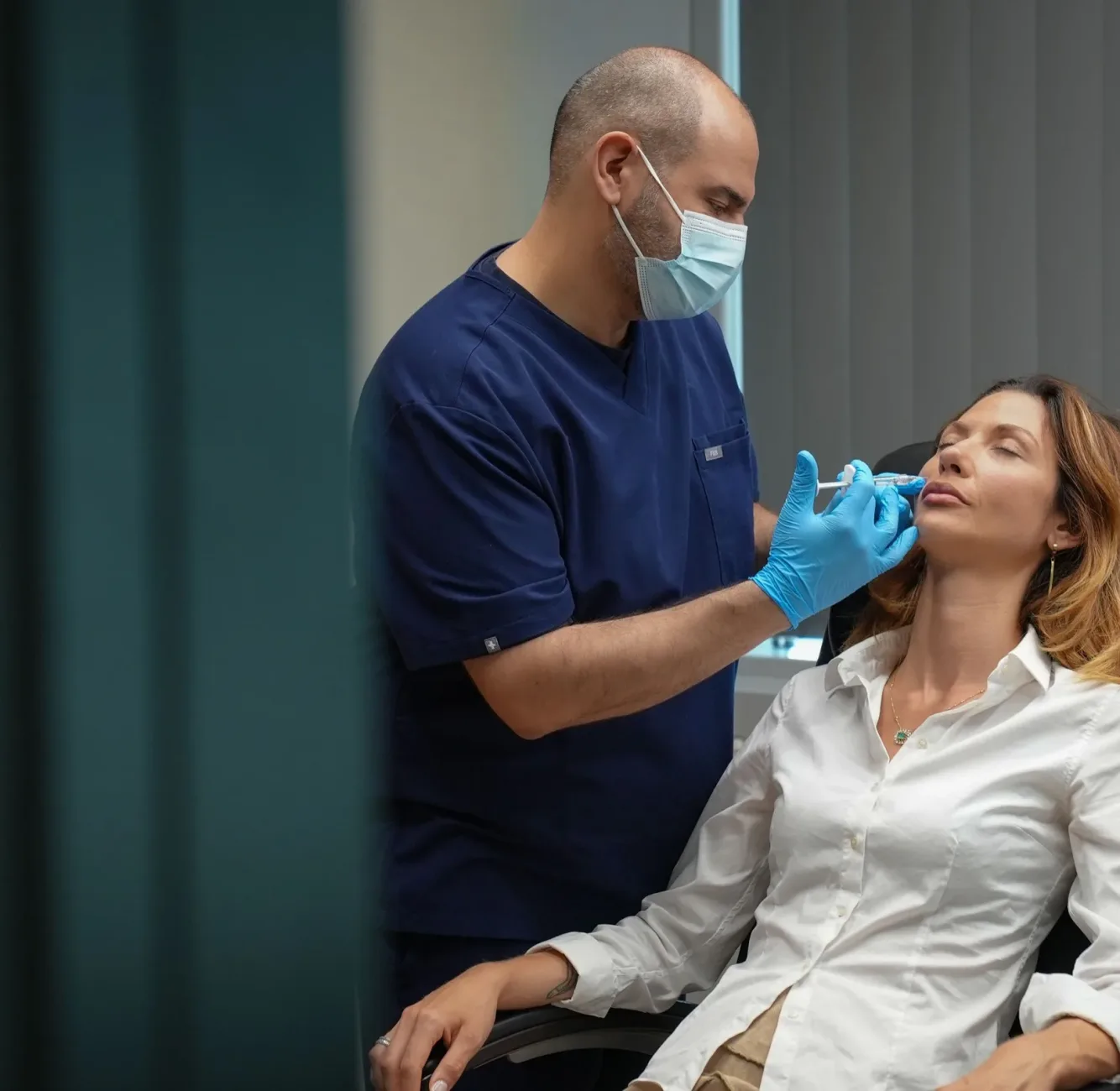
Swiss basic health insurance (OKP) covers medically necessary dermatology, such as the assessment of a suspicious mole and the treatment of skin cancer, acne, eczema or rosacea. Aesthetic treatments, such as wrinkle treatment, skin boosters or cosmetic laser treatments, are self-pay.
Even when a service is covered, you pay part of the cost through your deductible (Franchise) and co-payment (Selbstbehalt). This page explains the basic rules and how services at Dermatologie Aslanel in Zurich-Seefeld are usually classified. As of November 2026.
01Basic insurance, supplementary insurance, self-pay
Basic health insurance is compulsory for everyone living in Switzerland under the Health Insurance Act (KVG). It pays for services that are medically necessary and that are effective, appropriate and cost-effective. In dermatology this means that if there is a disease or a specific suspicion, the specialist assessment and treatment are billed via basic insurance.
Supplementary insurance is optional and varies widely between products. Whether it contributes to a service that basic insurance does not cover is something only your insurer can confirm, ideally before treatment. Aesthetic treatments are generally not covered by either and are invoiced directly to you.
02What is usually covered
At Dermatologie Aslanel, these services are usually billed via basic health insurance (OKP, TARDOC tariff):
- Assessment of a suspicious or changing skin lesion, such as a mole
- Skin checks for people with a family history of melanoma, even without a specific concern
- Treatment of skin cancer and precancerous lesions such as actinic keratoses
- Medically necessary acne treatment
- Assessment and treatment of atopic dermatitis (eczema)
- Assessment and medical treatment of rosacea
- Investigating the cause of hair loss
For skin cancer treatment, we clarify the exact cost share with your insurer case by case.
03What you pay yourself
Self-pay services include:
- A preventive skin check without risk factors or a specific concern
- Aesthetic consultation (30 minutes, CHF 150.–, credited towards a subsequent treatment)
- Wrinkle treatment, hyaluronic acid, skin boosters, polynucleotides, PRP and mesotherapy
- Laser tattoo removal, skin resurfacing and laser scar treatment
- Removal of benign age spots once they have been assessed
- Treatment of visible small vessels for cosmetic reasons
A single visit can involve both. Assessing a pigmented spot to rule out skin cancer is covered; if the spot is benign and you want it removed by laser, that treatment is usually self-pay. Prices are listed on the price page.
04Deductible and co-payment
For covered services you first pay your chosen annual deductible. For adults it ranges from CHF 300.– to CHF 2,500.–; for children from CHF 0.– to CHF 600.–. After that you pay a 10 percent co-payment, capped at CHF 700.– a year for adults and CHF 350.– for children. Beyond that, the insurer pays in full.
If you chose an alternative model, such as a family doctor, HMO or telemedicine plan, you usually need a referral or a phone triage before seeing a dermatologist. Without it, your insurer may reduce payment. Check your policy before booking.
05TARDOC: the new tariff since 2026
Since 1 January 2026, outpatient medical services in Switzerland are no longer billed under TARMED but under the new TARDOC tariff, together with outpatient flat rates. What basic insurance covers has not changed, but the items on your invoice look different. If you have questions about an invoice, we are happy to help. General information on Swiss health insurance is available from the Federal Office of Public Health (BAG/FOPH).
06Frequently requested treatments
07Frequently asked questions
Does Swiss health insurance pay for a mole check?
If there is a specific concern about a skin lesion, yes: the assessment is covered by basic insurance. With a family history of melanoma, basic insurance also covers checks without a specific concern. A purely preventive check without risk factors is self-pay.
Do I need a referral to see a dermatologist?
Not with the standard basic insurance model. With a family doctor, HMO or telemedicine model you usually need a referral or phone triage first.
Is laser treatment covered?
Laser treatments for cosmetic reasons, such as tattoo removal, skin resurfacing or removing benign age spots, are self-pay. Laser-assisted treatment of precancerous lesions is part of medical care.
Is acne treatment covered?
Medically necessary acne treatment is covered by basic insurance. Laser treatment of acne scars is usually self-pay.
What is the difference between deductible and co-payment?
The deductible (Franchise) is the fixed annual amount you pay first. The co-payment (Selbstbehalt) is 10 percent of costs after that, capped at CHF 700.– a year for adults.
Does supplementary insurance cover aesthetic treatments?
Generally not. Ask your insurer before treatment whether your supplementary policy contributes to a specific service.
What is TARDOC?
TARDOC is the tariff used to bill outpatient medical services in Switzerland since 1 January 2026. It replaced TARMED. It does not change which services basic insurance covers.
Medically reviewed by Firat Aslanel, specialist in dermatology and venereology (FMH) · updated 16 November 2026